
Best Water Purifier Buying Guide: How to Choose the Right Water Purifier for Your Home
Introduction
The quality of the water you drink every day has a direct impact on your health and overall well-being. Choosing the right water purifier is one of the simplest ways to ensure your family has access to cleaner and safer drinking water. Whether you use tap water, borewell water, or municipal water, its quality can vary depending on your location and water source. Although water may appear clear, it can still contain impurities such as bacteria, viruses, heavy metals, pesticides, excess dissolved salts, and other contaminants that are not visible to the naked eye.
A water purifier helps remove these harmful impurities, making drinking water safer and better tasting. However, choosing the right water purifier is not always easy. Today, there are many options available, including RO, UV, UF, and gravity-based purifiers, each designed for different water conditions. Buying the wrong purifier may lead to unnecessary maintenance costs or may not provide the level of purification your household actually needs.
The best water purifier is not simply the one with the highest price or the most features. It is the one that matches your water quality, family size, daily water consumption, and maintenance budget. Understanding these factors before making a purchase can help you choose a purifier that offers reliable performance and long-term value.
In this buying guide, you’ll learn how different purification technologies work, the ideal TDS level for drinking water, key features to look for, common buying mistakes, and practical tips to help you choose the best water purifier for your home.
Why Do You Need a Water Purifier?
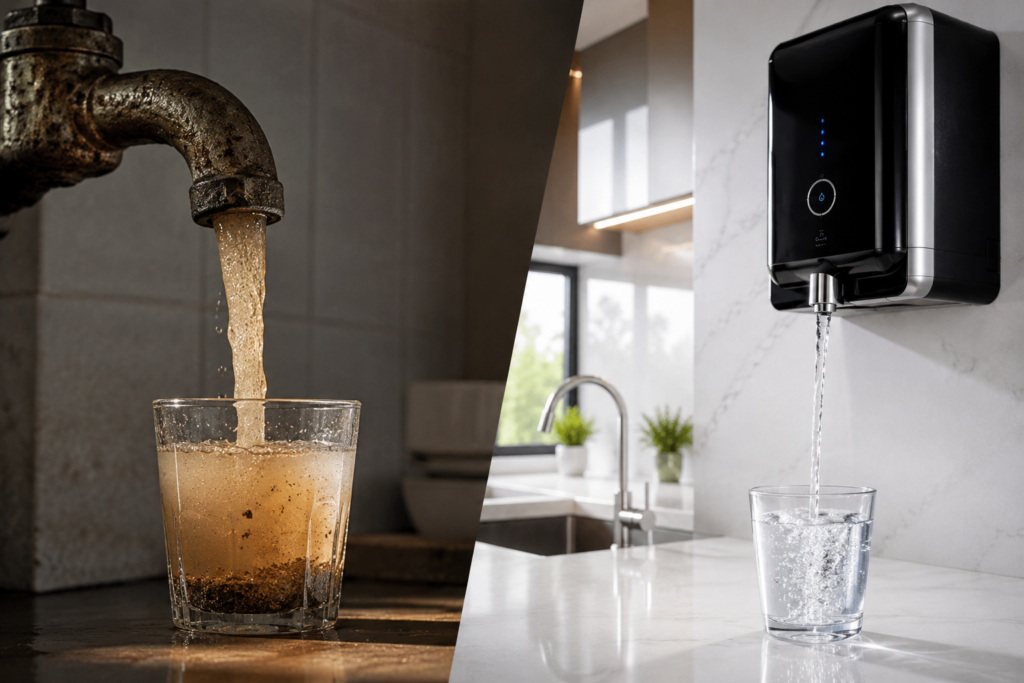
Many people assume that clear water is always safe to drink. In reality, harmful contaminants are often invisible and cannot be detected by appearance alone. Depending on your location, water may contain microorganisms, chlorine, heavy metals, pesticides, or excess minerals that can affect both health and taste.
A good water purifier acts as an additional layer of protection by reducing or removing these impurities. It also improves the taste and odour of drinking water, making it more pleasant to consume every day.
A water purifier is especially useful if:
- Your home uses borewell or groundwater.
- Your tap water has a strange taste or smell.
- The TDS level is high.
- You want to reduce bacteria and viruses.
- You have children, elderly family members, or people with weaker immunity at home.
Besides improving water quality, a purifier can also reduce your dependence on bottled water, making it a more economical and environmentally friendly choice over time.
How Does TDS Affect Your Drinking Water Quality?
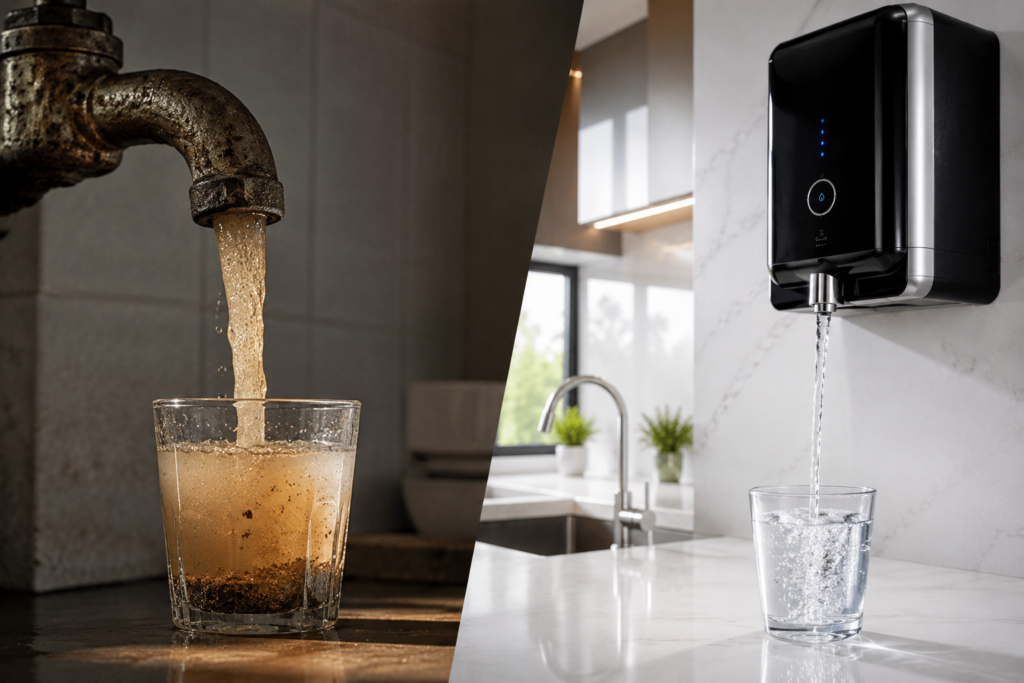
One of the most important terms you’ll come across while buying a water purifier is TDS (Total Dissolved Solids).
TDS refers to the total amount of dissolved minerals, salts, and other substances present in water. These include calcium, magnesium, sodium, potassium, and other naturally occurring minerals. While some minerals are beneficial, excessive TDS can affect both the taste and quality of water.
General TDS Guide
| TDS Level | Water Quality |
| Below 50 ppm | Very low minerals; generally not preferred for regular drinking |
| 50–150 ppm | Good drinking water |
| 150–300 ppm | Ideal for most households |
| 300–500 ppm | Acceptable, depending on water quality |
| Above 500 ppm | Purification is usually recommended |
It is important to remember that TDS alone does not determine whether water is safe to drink. Water with low TDS may still contain bacteria or viruses, while water with higher TDS may simply contain more dissolved minerals. That’s why choosing the right purification technology depends on both the TDS level and the type of contaminants present in your water.
Is an RO Water Purifier Always the Best Choice?
Not necessarily.
Many people believe that RO is the best solution for every home, but that isn’t always true.
An RO (Reverse Osmosis) purifier is generally recommended when the water has high TDS levels (typically above 300 ppm) or contains excessive dissolved salts and heavy metals. If your home receives municipal water with low TDS, an RO purifier may not always be necessary. In such cases, UV or UF purification may be sufficient, depending on the quality of the water supply.
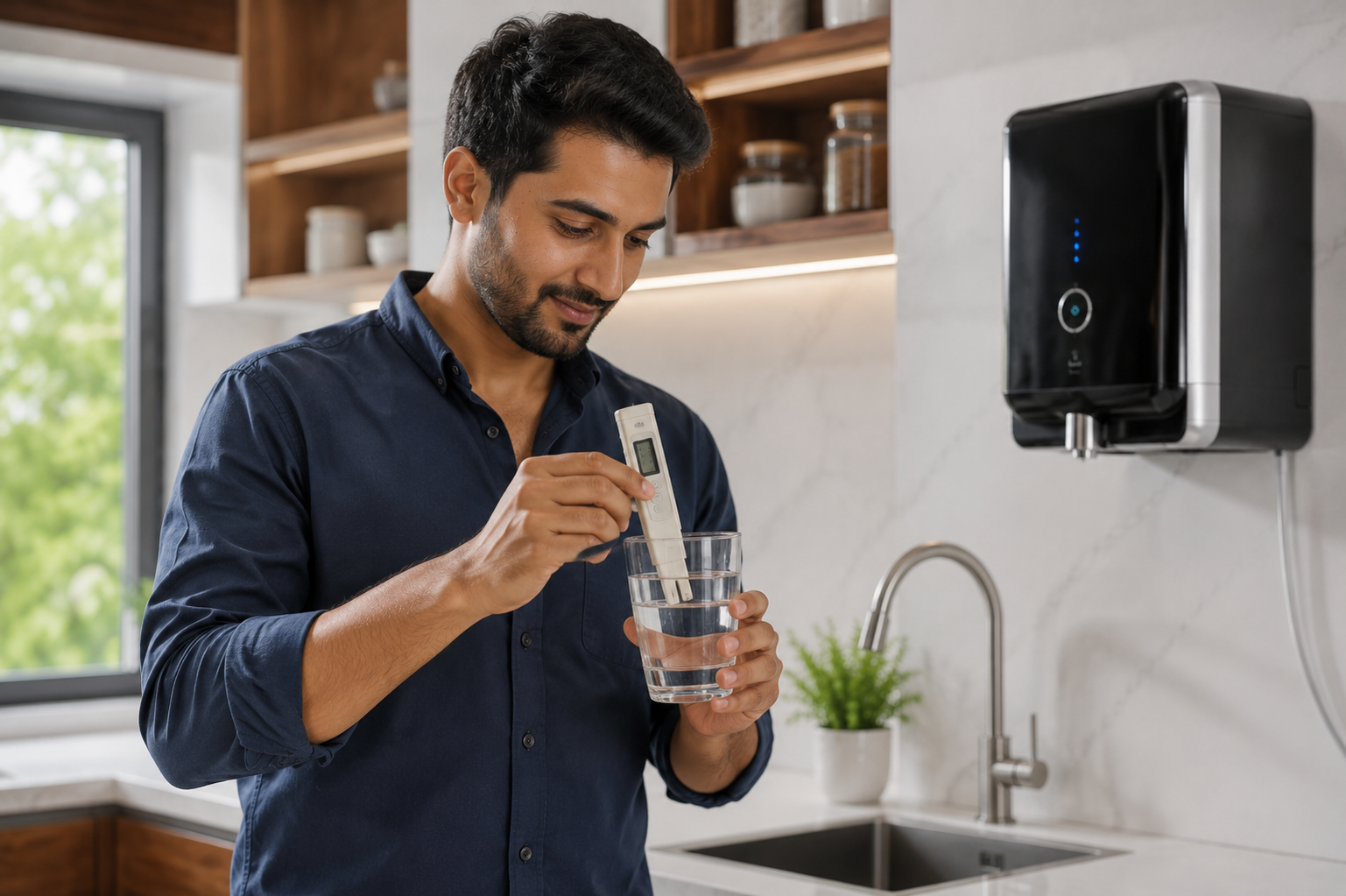
Before buying any purifier, it is a good idea to check your home’s water quality or measure the TDS level using a simple TDS meter. This helps you choose the right purifier instead of paying for features you may not actually need.
Understanding Different Types of Water Purifiers
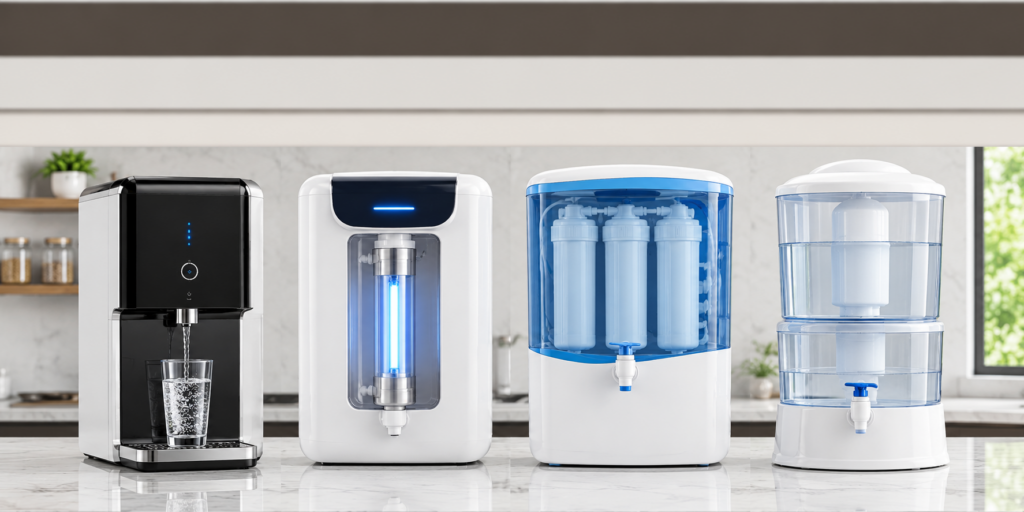
Before buying a water purifier, it is important to understand how different purification technologies work. Every home receives water from a different source, so one type of purifier may work well for one household but not for another. Choosing the right technology depends on your water quality rather than simply selecting the most expensive model.
RO (Reverse Osmosis) Water Purifier
RO technology removes dissolved salts, heavy metals, chemicals, and other impurities by forcing water through a semi-permeable membrane. It is commonly recommended for areas where water has a high TDS level or comes from borewells.
Best for:
- Borewell water
- High TDS water (generally above 300 ppm)
- Areas with hard water
Pros
- Removes dissolved salts and heavy metals
- Improves the taste of high TDS water
- Suitable for hard water
Cons
- Requires electricity
- Produces some wastewater during purification
- Filter replacement costs are usually higher than other purifier types
UV (Ultraviolet) Water Purifier
A UV purifier uses ultraviolet light to destroy harmful bacteria, viruses, and other microorganisms. However, it does not reduce TDS or remove dissolved salts from water.
Best for:
- Municipal or treated tap water
- Low TDS water with possible microbial contamination
Pros
- Effectively kills bacteria and viruses
- Fast purification process
- No change in the natural mineral content of water
Cons
- Does not remove dissolved salts
- Works only with electricity
UF (Ultrafiltration) Water Purifier
UF technology uses a fine membrane to remove bacteria, cysts, and suspended particles. Unlike RO, it does not significantly reduce TDS and usually works without electricity.
Best for:
- Low TDS water
- Areas with frequent power cuts
Pros
- No electricity required
- Low maintenance
- Removes suspended impurities
Cons
- Not suitable for high TDS water
- Cannot remove dissolved salts
Gravity-Based Water Purifier
Gravity water purifiers use activated carbon and filtration cartridges to clean water without electricity. They are suitable only where the water supply is already relatively clean.
Best for:
- Municipal water with low contamination
- Small families
- Places with no electricity
Pros
- Affordable
- Portable
- No electricity required
Cons
- Limited purification capability
- Not recommended for highly contaminated or high TDS water
Which Water Purifier Is Right for Your Water Source?
Instead of buying a purifier based on advertisements or brand popularity, choose one according to your water source.
Borewell Water
Borewell water often contains higher levels of dissolved minerals and salts. In many cases, an RO water purifier is the better option, especially if the TDS level is high.
Municipal Tap Water
If your city supplies treated municipal water with a normal TDS level, a UV or UF purifier may be sufficient, depending on the overall water quality.
Mixed Water Supply
Some homes receive both borewell and municipal water. In such cases, a purifier with RO + UV + UF technology can provide more complete purification.
Tip: Before purchasing a purifier, consider testing your water quality or checking its TDS level. This simple step can help you choose the right purifier and avoid spending money on features you may not actually need.
How to Choose the Best Water Purifier
Choosing the best water purifier is not just about selecting a well-known brand. The right purifier should match your home’s water quality, daily water usage, family size, and maintenance budget. Before making a purchase, consider the following factors to ensure you invest in a purifier that meets your needs.
1. Check Your Water Source First
The first step is to identify where your drinking water comes from.
- Borewell Water: If your home uses borewell water, check the TDS level before buying a purifier. When the TDS is high, an RO purifier is usually the better option.
- Municipal Water: Generally has a lower TDS but may still contain bacteria or viruses. A UV or UF purifier may be enough if the water quality is good.
- Mixed Water Supply: If your home uses both borewell and municipal water, a purifier with RO + UV + UF technology offers greater flexibility.
Testing your water before buying a purifier can help you avoid paying for features you don’t actually need.
2. Consider the TDS Level
The TDS level is one of the most important factors when choosing a purifier.
- Below 150 ppm: Water already contains a low amount of dissolved solids. RO may not always be necessary.
- 150–300 ppm: Suitable for most households, depending on the water source.
- Above 300 ppm: An RO purifier is generally recommended to reduce excess dissolved salts and improve water quality.
Remember, TDS is only one factor. Even water with a low TDS may require purification if it contains harmful microorganisms.
3. Choose the Right Storage Capacity
The storage tank should match your family’s daily drinking water needs.
- 1–2 People: 5–7 litres
- 3–4 People: 7–9 litres
- 5 or More People: 9–12 litres or more
A larger storage tank ensures clean drinking water remains available during power cuts or periods of high usage.
4. Check Filter Replacement Costs
Many buyers only compare the purchase price and ignore maintenance expenses.
Before buying, check:
- Filter replacement cost
- Service availability
- Warranty coverage
- Annual maintenance cost (AMC)
A purifier with lower maintenance costs can save money over the long term.
5. Look for Useful Features
Modern water purifiers offer many additional features. While not all are essential, some can improve convenience and safety.
Useful features include:
- Multi-stage purification
- Mineral retention or mineralizer technology
- Filter replacement indicator
- Tank full indicator
- Auto shut-off
- Child lock (available in some premium models)
- Smart display for maintenance alerts
Choose features that provide real value instead of paying extra for functions you may never use.
Common Mistakes to Avoid When Buying a Water Purifier
Many buyers purchase a purifier based only on advertisements or online discounts. Avoid these common mistakes before making your decision.
Buying RO Without Checking Water Quality
RO technology is useful for high TDS water, but it is not the best choice for every household. Always understand your water quality before selecting a purifier.
Ignoring Maintenance Costs
A purifier with a lower purchase price may require expensive filter replacements later. Always consider long-term maintenance costs.
Choosing a Small Storage Tank
A storage tank that is too small may not meet your family’s daily needs, especially during power outages.
Buying Only Based on Brand Name
Popular brands often offer reliable products, but the best purifier is the one that matches your water source and household requirements.
Skipping Regular Maintenance
Even the best water purifier cannot perform properly if filters are not replaced on time. Regular servicing helps maintain water quality and extends the life of the purifier.
Final Buying Tip
Before purchasing a water purifier, spend a few minutes checking your water source, TDS level, family size, and expected maintenance costs. A little research today can help you choose a purifier that provides safe drinking water, reliable performance, and better value for years to come.
Final Thoughts: Finding the Right Water Purifier for Your Home
Buying a water purifier is not about choosing the most expensive model or the brand with the most features. Before comparing brands or features, take a few minutes to understand the quality of the water supplied to your home. This makes it much easier to choose a purifier that suits your household’s everyday requirements. Factors such as your water source, TDS level, family size, storage capacity, and maintenance costs all play an important role in making the right decision.
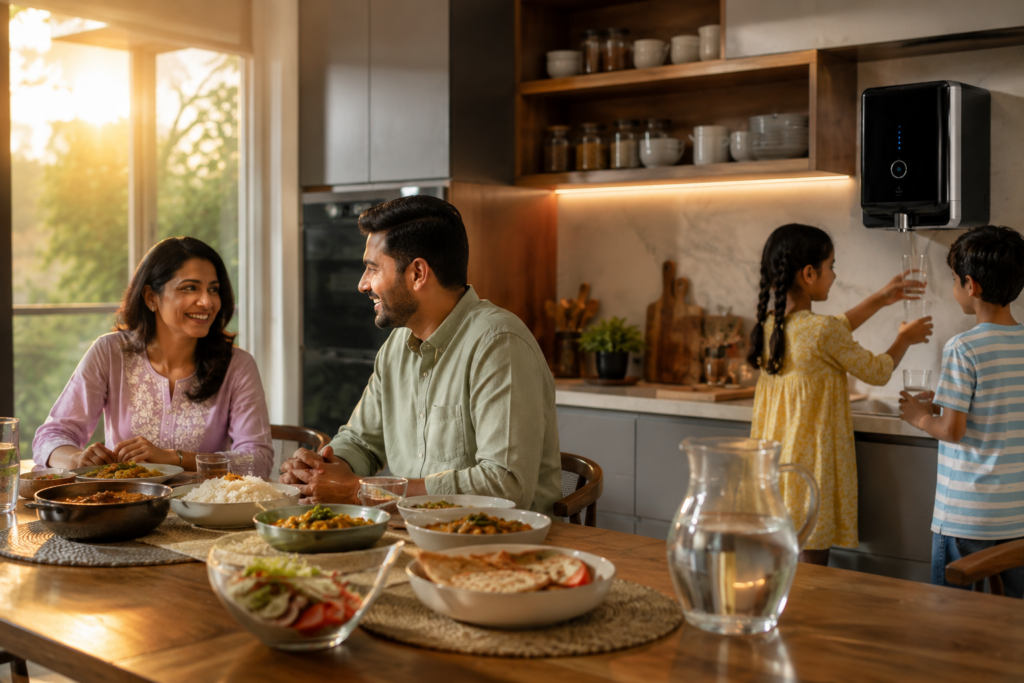
Instead of relying on advertisements or assumptions, consider testing your water before making a purchase. This small step can help you avoid unnecessary expenses and ensure that the purifier you choose is suitable for your household. A well-selected water purifier not only improves the quality of your drinking water but also provides long-term convenience, better value, and greater peace of mind.
Frequently Asked Questions
1. How can I choose the right water purifier for my home?
Start by identifying your water source and checking its TDS level. Once you understand your water quality, compare different purification technologies, storage capacity, maintenance costs, and after-sales service before making your final decision.
2. What TDS range is considered suitable for drinking water?
For most households, drinking water with a TDS reading between 50 and 300 ppm provides a good balance of taste and naturally occurring minerals. However, TDS alone cannot determine whether water is safe, as harmful bacteria, viruses, and chemicals may still be present.
3. Does every home need an RO water purifier?
Not always. An RO purifier is mainly useful when the water contains a high level of dissolved solids or salts. If your local water supply already has a low TDS level and is properly treated, another purification method may be a more suitable option.
4. Which purifier works better with borewell water?
Since borewell water often contains more dissolved minerals, checking the TDS level before buying a purifier is a smart first step. If the reading is high, an RO-based purifier is usually a practical choice.
5. Is a UV or UF purifier suitable for municipal water?
Many homes receiving treated municipal water can use a UV or UF purifier effectively. However, the best option depends on the actual quality of the water supplied in your area.
6. When should water purifier filters be replaced?
The lifespan of a filter can vary depending on the type of purifier, the quality of your water, and how frequently it is used. Replacing filters at the recommended time helps maintain consistent purification performance and water quality.
7. Can a water purifier improve the taste of drinking water?
Yes. By reducing impurities, chlorine, and excess dissolved substances, many water purifiers help improve both the taste and odor of drinking water, making it more pleasant to consume.
8. What’s the easiest way to measure my home’s TDS level?
A digital TDS meter provides a quick and simple way to estimate the amount of dissolved solids in your water. The reading can help you decide which type of purifier is more suitable for your home.
9. How much maintenance does a water purifier require?
Regular maintenance usually includes replacing filters, cleaning the storage tank when required, and servicing the purifier according to the recommended schedule. Timely maintenance helps maintain purification performance.
10. Can a water purifier work without electricity?
Yes. Gravity-based models and many UF purifiers can operate without electricity. However, most RO and UV systems require a continuous power supply.
11. How long can a water purifier last?
With proper servicing and regular filter replacement, a quality water purifier can continue performing efficiently for many years. Its lifespan depends on water quality, usage, and overall maintenance.
12. What should I compare before buying a water purifier?
Compare your water source, purification technology, storage capacity, maintenance cost, warranty, service support, and filter replacement schedule. Looking at all these factors together will help you select a purifier that fits your household rather than simply choosing the most popular model.