

Best Chopping Board Buying Guide for Every Kitchen
Choosing the best chopping board for preparing meals becomes much easier when your kitchen tools match the way you cook. A chopping board is one of those essentials that quietly supports almost every recipe, whether you’re slicing fresh vegetables, preparing fruit, cutting herbs, or getting ingredients ready for a family dinner. Although it may look like a simple kitchen accessory, the right chopping board can improve comfort, help protect your knives, and create a cleaner workspace.
Choosing the chopping board should be based on how it performs in your kitchen, not simply because it looks attractive or has a lower price tag. However, a board that suits your daily cooking routine is often a better investment than one that looks attractive. Before making a purchase, it is worth understanding how different materials, sizes, and designs perform in real kitchen situations.
Match Your Board to Your Cooking Habits
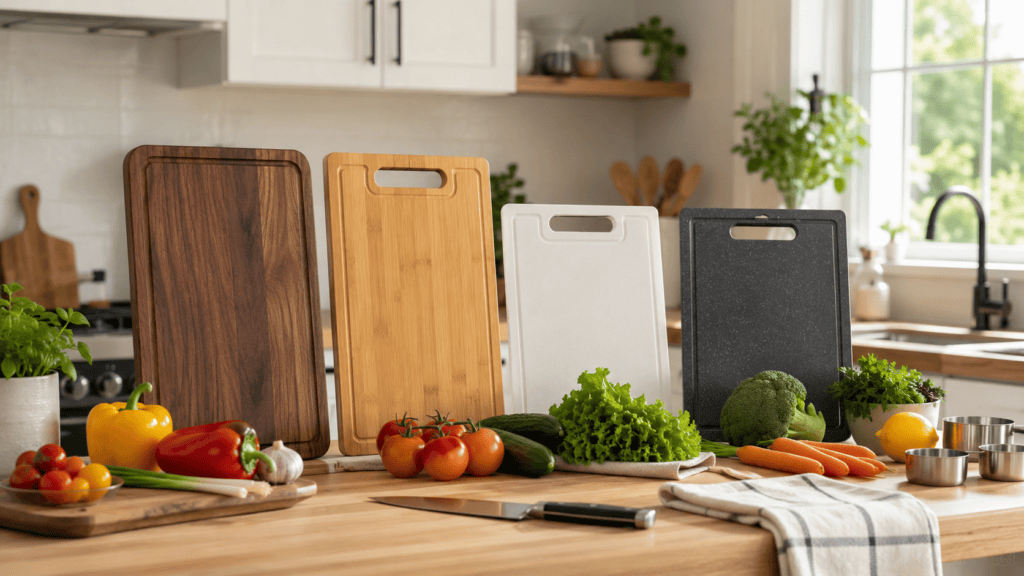
Before choosing a chopping board & comparing materials or features, take a moment to consider your cooking habits. Do you prepare several meals every day, or do you mostly cook on weekends? Do you usually chop vegetables, prepare meat, bake bread, or handle a little of everything?
Your answers can make the buying process much easier. Someone who enjoys cooking elaborate meals may benefit from a larger work surface, while a smaller household might prefer a compact board that is easy to store and clean. Choosing a board that matches your routine helps create a more comfortable cooking experience.
Understanding Different Chopping Board Materials
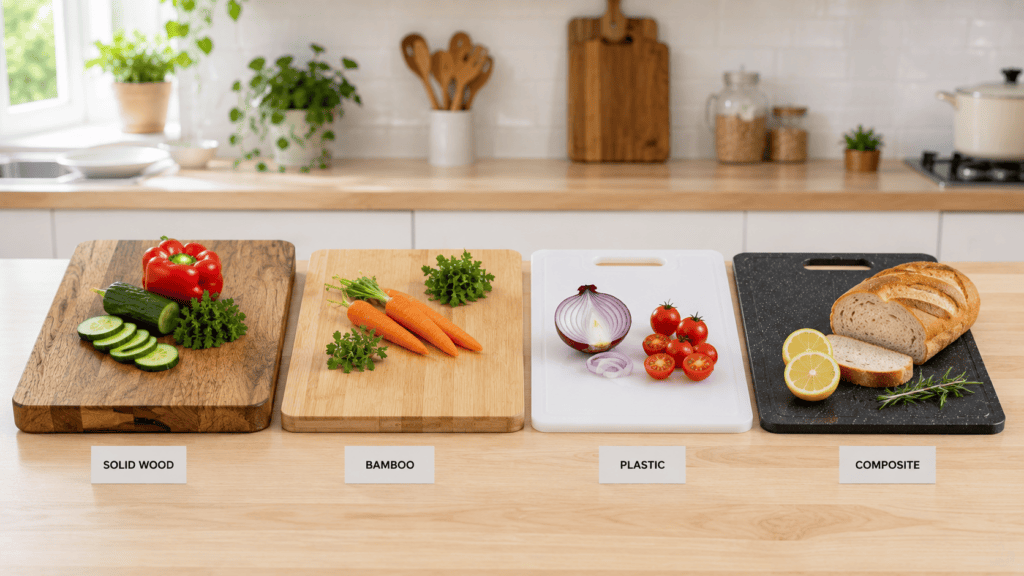
Every material offers a different experience during food preparation. Instead of searching for a single “perfect” option, it is more useful to understand which material fits your personal cooking style.
Wooden Boards
Wooden chopping boards are appreciated for their natural appearance and comfortable cutting surface. They provide good support for everyday food preparation and are often chosen by home cooks who enjoy traditional kitchen tools. With regular care, a wooden board can remain reliable for many years.
Bamboo Boards
Bamboo boards are a practical option for kitchens where lightweight equipment is preferred. They are easy to handle, simple to store, and blend well with both modern and classic kitchen interiors. Many households choose bamboo because it offers a balance between appearance and everyday usability.
Plastic Boards
Plastic chopping boards are commonly used in busy kitchens because they are convenient for daily food preparation. Many families keep separate plastic boards for different ingredients, making kitchen routines more organised while supporting cleaner food preparation practices.
Composite Boards
Composite chopping boards combine different materials to create a strong and dependable cutting surface. They are designed for people who cook regularly and want a board that can handle frequent use without losing its shape or performance.
A Better Chopping Board Creates a Better Cooking Experience
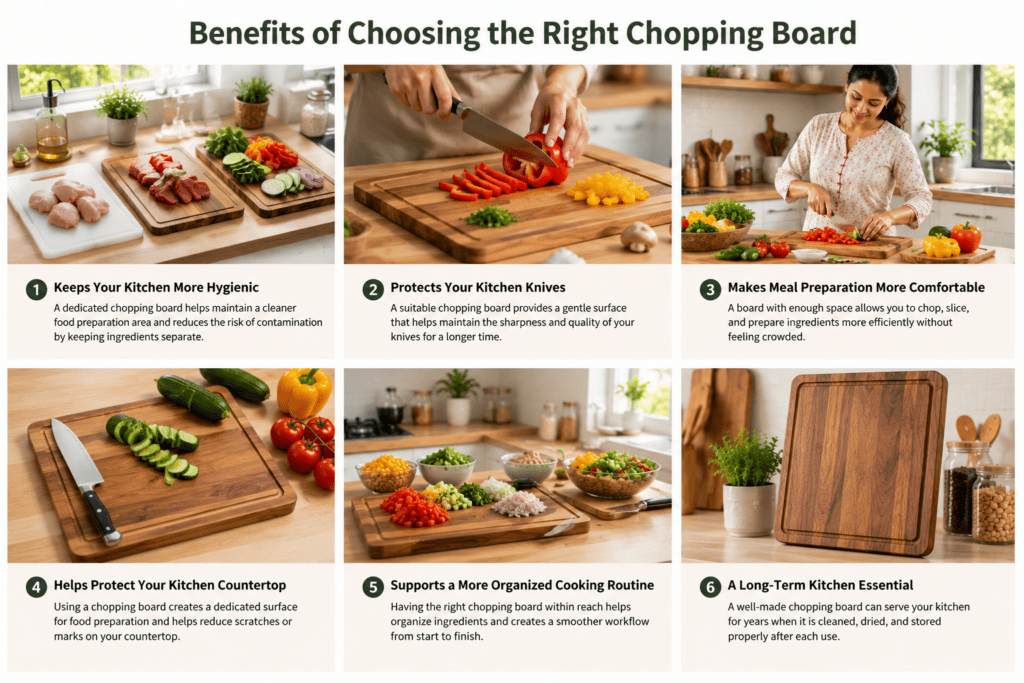
Choosing a chopping board carefully can improve much more than your food preparation area. A suitable board creates a stable surface that helps you cut ingredients with better control and confidence.
It also helps reduce unnecessary wear on your kitchen knives by providing a surface designed for regular cutting. Over time, this can help maintain better cutting performance while making everyday meal preparation feel smoother.
Another advantage is improved kitchen organisation. Keeping dedicated boards for different preparation tasks creates a more structured workflow, making cooking feel simpler and more efficient. A well-chosen chopping board also protects your kitchen worktop from scratches and daily wear, helping maintain a cleaner and tidier cooking space.

What Makes One Chopping Board Better Than Another?
Two chopping boards may look similar at first glance, but small details often decide which one feels better during everyday use. Before buying, spend a little time checking the features that affect comfort, durability, and convenience.
Size should match the way you prepare food. If you regularly cut large vegetables or prepare meals for several people, a spacious board provides more working room. For smaller kitchens or quick tasks, a compact board is easier to handle and store.
Thickness also deserves attention. A thicker board usually feels more stable on the countertop and is less likely to bend over time. It often provides a more solid cutting surface, especially during frequent use.
The surface texture should allow ingredients to stay in place while you cut. A smooth but well-balanced surface gives you better control without making the board difficult to clean.
Some chopping boards include practical details such as juice grooves around the edges. These channels help collect liquid from fruits, vegetables, or cooked foods, keeping the countertop cleaner while you work.
Finally, consider how much maintenance you are comfortable with. Some materials need occasional care, while others are designed for simple everyday cleaning. Choosing a board that matches your routine makes it easier to use consistently.
Buying Mistakes That Are Easy to Avoid
Spending a few extra minutes comparing different options can help you choose a chopping board that feels right from the very first use.
One common mistake is choosing a chopping board that is too small. Limited cutting space often means ingredients fall onto the countertop, making preparation less comfortable.
Another mistake is focusing only on appearance. A stylish board may not always provide the durability or practicality needed for everyday cooking.
Some buyers also overlook how the board feels during use. If it moves too easily on the work surface or feels unstable while cutting, everyday tasks can become less comfortable.
Replacing a worn-out chopping board is also important. Deep cuts and heavy wear can make any board less pleasant to use, so checking its condition occasionally is a good habit.
Simple Habits That Help Your Board Last Longer
Taking care of a chopping board requires only a few simple habits.
Wash the board soon after preparing food instead of leaving it for long periods. Dry it with a clean cloth before putting it away, as storing it while damp may reduce its lifespan.
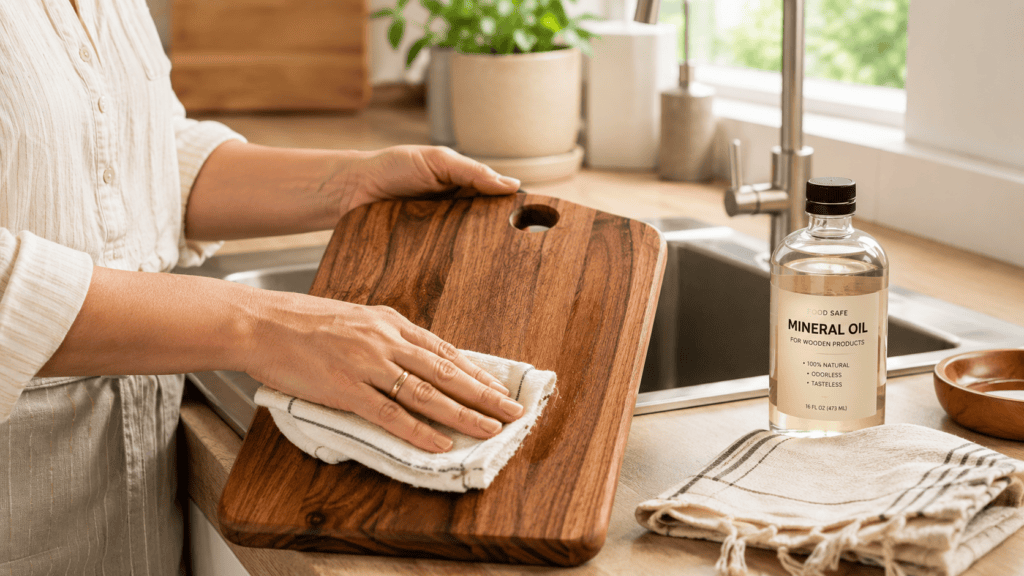
If you use a wooden board, applying food-safe mineral oil occasionally helps maintain its natural finish and keeps the surface in good condition.
Avoid using the board for purposes it was not designed for, such as placing very hot cookware directly on top. Using each kitchen tool for its intended purpose helps extend its life.
Final Thoughts
The best chopping board is not necessarily the most expensive one—it is the one that fits naturally into your daily cooking routine. A board that feels comfortable to use, suits the type of meals you prepare, and is easy to maintain can become one of the most dependable tools in your kitchen.
Instead of making a quick decision, compare a few options, think about your cooking habits, and choose a board that supports the way you work. A thoughtful purchase today can make everyday food preparation easier for years to come.
Frequently Asked Questions
1. Does the size of a chopping board really matter?
Yes. A board with enough working space allows you to prepare ingredients more comfortably and helps keep your countertop cleaner while cooking.
2. Is it better to own more than one chopping board?
Many home cooks prefer using separate boards for different preparation tasks because it keeps kitchen work more organised and convenient.
3. How often should a chopping board be replaced?
There is no fixed schedule. If the board becomes heavily worn, develops deep cuts, or no longer feels safe to use, it is a good time to replace it.
4. Which material is suitable for everyday home cooking?
The answer depends on your personal cooking style. Wooden, bamboo, plastic, and composite boards all have advantages, so the right choice depends on your routine and maintenance preferences.
5. What is the easiest way to keep a chopping board in good condition?
Cleaning it after each use, drying it properly, and storing it in a dry place are simple habits that help maintain its condition over time.